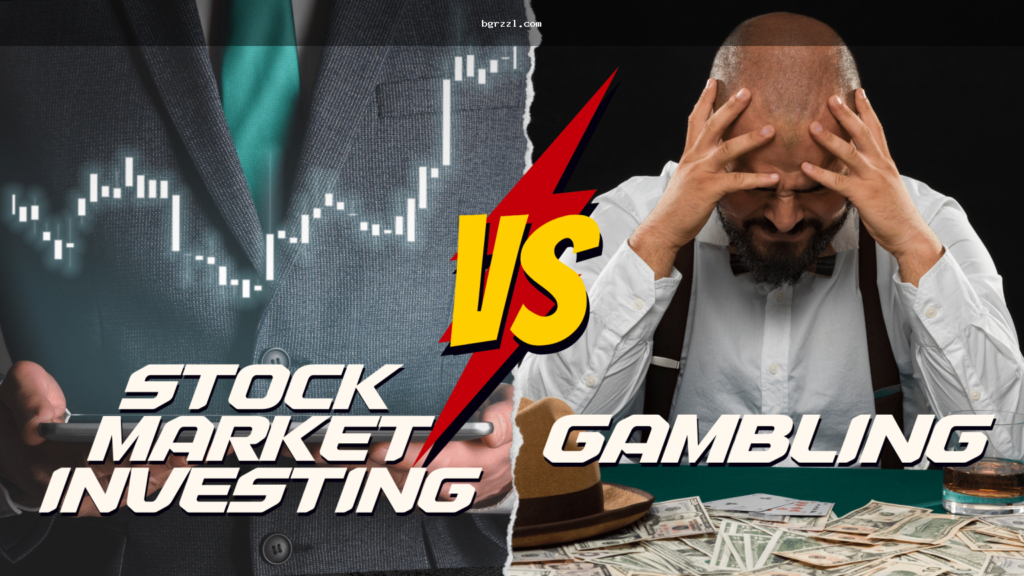
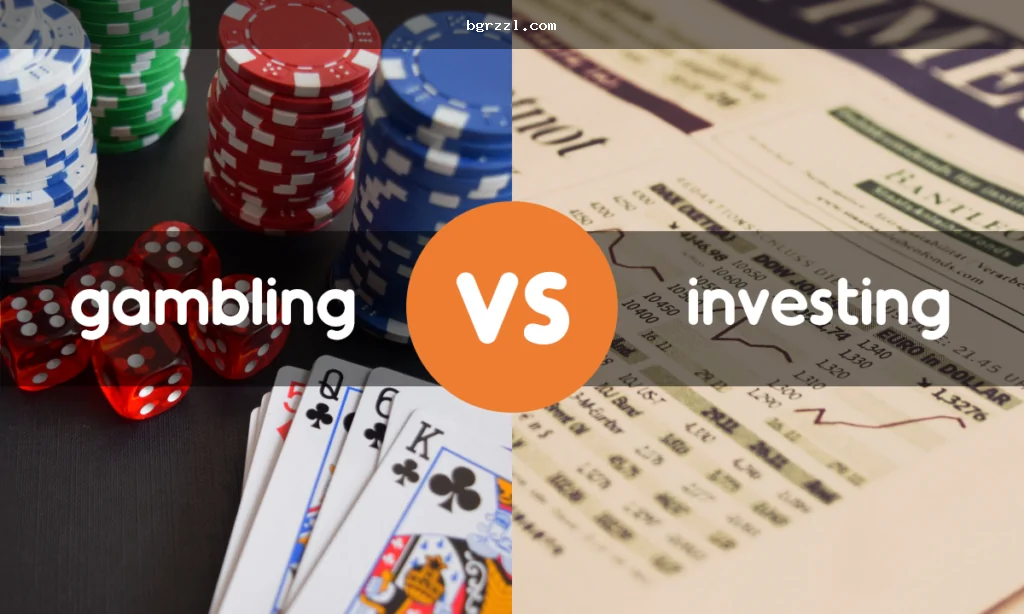
The main difference is simple: in investing, you typically associate money with some asset, partnership, or long-term value; in gambling, you stake on uncertain outcomes more. So even if balance, odds, chart, or fast profit is written on the same screen— not all money-based activity is investment.
This confusion arises most when betting or casino-style offers present themselves as smart earning opportunities. Four questions are enough to differentiate: what are you buying, where does the return come from, who sets the rules, and is your behavior plan-driven or thrill-driven?
- What are you buying: ownership, asset, or just outcome?
- Source of return: value/income, or payout if you win?
- Structure: Is there an operator edge or platform-set rules?
- Behavior: plan-driven, or loss-chasing?
What are you actually buying
The decision leans towards investing when you see at least some underlying value, ownership, claim, or basis for long-term valuation. The question here is: how can the value of the item change over time, why can it change, and what are you holding onto?
The decision leans towards gambling when you are primarily buying an outcome. For example, if the result of a match, a spin, a hand, or another single event is the center of winning or losing, then it is not buying an asset; it is staking on the outcome.
The most common mistake here is making decisions based on language. Just because an offer has growth, smart income, or earning written on it does not make it investing. First, check: do you have something resembling ownership in your hands, or is there just a payout if the event outcome matches?
How returns are generated
The second test is the source of profit. In investing, potential returns are usually associated with time, value, income, or analysis-based decisions. In gambling, payouts typically occur when a specific result goes in your favor.
This difference becomes clearer when viewed in a small table:
| Test | Indication towards Gambling | Indication towards Investing |
|---|---|---|
| What are you buying | stake on the outcome | asset, ownership, or value exposure |
| source of return | payout on win/lose outcomes | time, price, income, or analysis-based probability |
| Time frame | quick resolution or short cycle | generally planned timeframe |
| language of decision | quick win | long-term goal |
If the only explanation for potential profit is—‘I will get money if I can predict the right outcome’—then it would not be right to call it investing. And if you cannot say in one sentence where the return is coming from, that is also a big warning sign.
whether there is an operator edge or platform-set rules
In many betting-style or casino-style offers, rules, odds, payout logic, or participation rhythm are determined by the platform. No matter how polished the user experience is, the structure remains game-like. This is a major difference from investing.
Here are some clear signs to be cautious:
- there is no underlying asset, but there is investment-like language
- return is entirely event outcome-dependent
- rules, fees, or payout logic are unclear
- there is encouragement to repeatedly deposit, top-up, or re-enter
- 1. Pressure to recover after a loss is created
- 2. There is no valuation framework, 3. , but there is more talk about skill or smart play
4. Even if there is a claim of skill, it needs to be verified separately. Because having a sense of control and the structure of outcomes really working in your favor is not the same thing. If the conditions of the platform drive the experience of winning and losing, then it is closer to gambling than investing.
5. Certain behaviors bring investing down to gambling
6. Not just the product or platform, user behavior can also change the classification. Even if a decision looks like an investment on paper, if the behavior is like gambling, the risk shifts in that direction.
7. These behaviors are particularly noteworthy:
- 8. Entering with the hope of quick profits without a plan
- 9. Increasing risk in the next decision to recover losses
- 10. Using borrowed money or money for urgent expenses
- 11. Acting on hype, streaks, or emotions instead of analysis
- 12. Changing positions repeatedly without a pre-established stop rule
13. The role of time is crucial here. In investing, time often allows for patience, discipline, and the opportunity to verify decisions. In a gambling-style environment, time can push you towards staking more, taking faster actions, or making more frequent decisions. So it's not just about where you are putting your money, 14. how 15. you are putting it is also important.
16. When not to call it an investment
17. It is safe to assume directly that something is not investing, but rather taking gambling or at least gambling-like risks when certain conditions are met:
- 18. You are not buying ownership, 19. but an outcome Buying
- Source of profit Not long-term value, Rather payout when winning
- The structure operator-set rules, odds, or repeated stakingStanding on
- Clear valuation framework Not
- Your decision Not plan-driven, Rather thrill-driven or loss-chasing
In this situation, the most realistic decision is not to see it as a wealth-building tool. Even if you participate, thinking of it as entertainment spend is more honest and safe. And if your goal is wealth formation, do not label betting/casino-style products as investing—even though its language sounds modern, smart, or growth-centric.
Finally, ask yourself a tough question: Am I holding any value, or just trying to catch results? If the answer leans towards the latter, then it would not be right to call it an investment.