During the game, many people question the changing numbers next to the score—What is betting? In sports betting, it is not just about predicting who will win; rather, it involves placing a stake in a specific market of a specific event odds to measure the potential return accordingly.
The mistake usually lies not in misunderstanding the definition, but in not understanding the usage. If the concepts of market, odds, the conditions under which a selection wins on the bet slip, and where to stop among the rapidly changing numbers in live betting are not clear, the risk increases.
What is betting actually?
To understand betting, four things need to be distinguished first:
- event: A decision is being made about a match or game
- market: A bet is being placed on the outcome of that event
- stake: How much money you are putting at risk
- odds: The number that determines the potential return if correct
A large part of sports betting is of the fixed-odds type. That is, when you confirm the bet slip, the odds displayed are considered for the potential return. Even if the game's situation changes later, the previous slip does not automatically get rewritten.
The main point here is: betting is not just about predicting the outcome; it is about placing a stake on a specific outcome in a specific market.Therefore, knowing the game and understanding the market are not the same thing.
Suppose, in a Football match, you chose the market for over 2.5 total goals. The odds are showing 1.80, and you placed a stake of 500 taka.In a match, if there are 3 or more goals, the selection will be considered correct and the return will be calculated according to the odds. If there are 2 or fewer goals, you will lose the stake. This small example illustrates how five things—event, market, odds, stake, and result—work together.
What do people actually bet on in sports betting?
There is not just one question in a match. There can be many types of markets. For example:
- Who will win?
- Will the total goals, runs, or points go above or below a certain limit?
- What will happen in a specific part of the game?
- Combining multiple selections together for a combo bet.
There are two common mistakes here:
- Taking a selection just by looking at the big return without understanding the market.
- Adding many selections on one slip, but not keeping clear which will win under what conditions.
Taking multiple selections together can show a larger potential return, but the risk also increases rapidly. If one selection is wrong, the entire combo can fail. Therefore, assuming that more markets mean more opportunities is not a safe understanding. Often, more markets also mean more chances for confusion.
What do the odds say, and what do they not say?
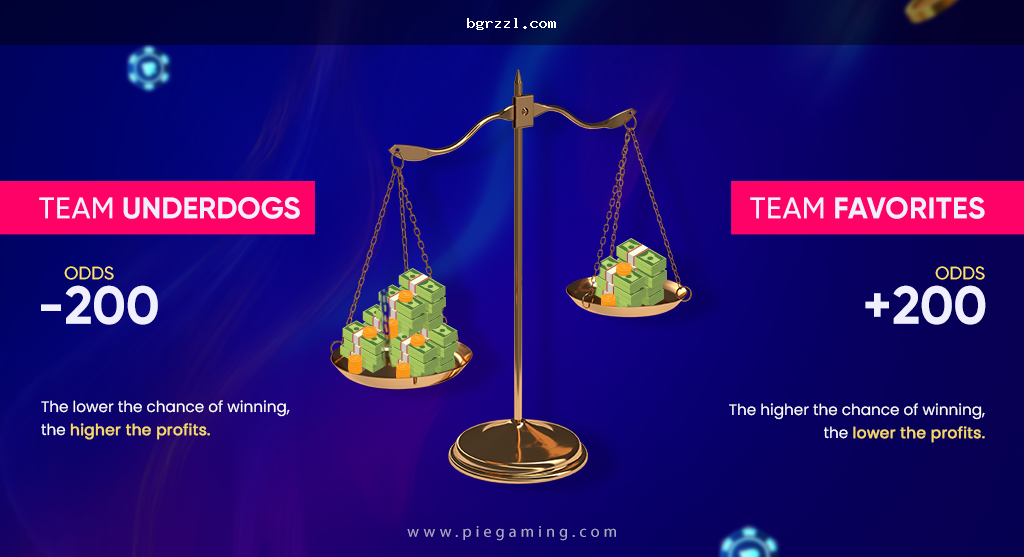
Odds are not just a number for profit. Simply put, the more uncertain the market considers an outcome, the larger the odds can be. Conversely, if an outcome is considered relatively more likely, the odds can be smaller.
But this is where the most misunderstandings occur:
- High odds do not necessarily mean a good opportunity.
- Low odds do not necessarily mean safe.
- Just because the return looks big does not mean the decision will be good.
Odds change rapidly in live matches because the score, time, pace, and situation of the match change. During this time, the selection risk increases for two reasons. First, the number you are deciding on may change when the slip refreshes. Second, the line of the same type of market may change, and you may actually confirm under new conditions instead of the previous ones. Therefore, as the pace increases in live betting, the risk of clicking without verification also increases.
What to compare before confirming a bet?
In sports betting, not all options are the same just because they show the same event. It is essential to compare at least these aspects before confirming a bet:
| What to compare | Why it is important |
|---|---|
| Different markets for the same event | The conditions for winner, total, specific portion results are not the same |
| The number of odds | High odds do not necessarily mean good value; uncertainty can also be higher |
| settlement rule | If you do not understand whether it will cover the whole match, specific time, or different rules beforehand, it leads to wrong expectations |
| Combo condition | It must be clear whether a mistake in one selection will void the entire slip |
| Information on the confirm screen | If you do not match market name, odds, stake, selection count, a wrong slip may occur |
Even if the names of the same market look similar, their conditions may differ. Therefore, before making a selection, it is essential to read not just the headline but also the market label and rules written on the bet slip. Especially when taking a combo, each selection needs to be read separately.
The most mistakes in live betting happen in this way
The attraction of live betting is speed. And that’s where the risk lies. In pre-match, there is time to think; in live, there is pressure. Odds refresh every few seconds, markets open and close, and users may think that if they do not confirm now, the opportunity will be lost.
Some common psychological traps work very well here:
- Overtrusting your favorite team
- Nothing has happened so far, it will happen this time Types of misconceptions
- The rush to quickly recover lost money
- Seeing a small profit and increasing the stake on the next bet
Therefore, the small table below is useful:
| The signal you will stop at | Why you will stop |
|---|---|
| Odds are changing every few seconds | You may decide based on the old numbers |
| You do not fully understand the market name on the bet slip | There is a risk of confirming a wrong selection |
| After losing, there is a desire to increase the stake | This could be the start of an impulsive decision |
| The page is redirecting to another domain | It could be phishing or a fake landing page |
| It is asking for top-up or payment to a personal account | If the payment route is unclear, the risk of fraud or disputes increases |

What to look for in payment and page verification
Another part of understanding sports betting is to clearly see the transaction flow. Reports have been published in the media in Bangladesh regarding the risks of online gambling transactions using digital payment routes. Therefore, it is more practical to verify a few things before viewing payment merely as a top-up.
See:
- Whether account name, page name, and payment name match
- Whether you are being asked to send money to an unfamiliar personal account
- Whether the payment reference or instruction is unclear
- Whether the same page is giving different numbers or different flows repeatedly
- Whether clicking login or register takes you to another domain
It is not right to assume that any page is safe just because it appears in the search results. Cloned pages, redirects, and phishing typically work here: you click on a familiar name, and then the flow takes you elsewhere.
| Warning signals | What could it mean |
|---|---|
| The spelling of the URL is unusual | It could be a clone or lookalike page |
| A new domain opens after login | There may be redirect or phishing risks |
| The site name is one, the payment name is another | The risk of confusion or disputes regarding transactions increases |
| New tabs or pop-ups are opening repeatedly | There could be fake flow or aggressive redirects |
Five questions to ask yourself before placing a bet
You don't need to know all the jargon to understand betting. Rather, being able to answer these five questions can take you a long way:
- Do I understand the market, or have I only looked at the return?
- If these odds change, will the meaning of my selection also change?
- If I take a combo, under what conditions will each selection win, is that clear?
- Am I about to click quickly in live excitement?
- Is the page and payment flow so clear that I can explain it myself later if there is a dispute?
If the answer to any of these questions is vague, then it is more reasonable not to confirm. Because in sports betting, mistakes happen not only regarding the outcome; often mistakes occur due to not understanding the market, not reading the rules, being rushed by live action, or making decisions based on unclear pages and payments.